Stack, Hang or Ruin: Winter Storage Rules for Your Spare Set of Wheels
By mid-November, most of us have made the swap. The summer alloys are off, the winter set is on, and the spare wheels get tucked into the garage until the clocks change again. Job done, right? Not quite. In Cornwall, a garage is less a sealed time capsule and more a slow-motion weather system. Damp air rolls in, temperatures bounce around, and anything left on a bare concrete floor gets a front-row seat to condensation. Alloy and tyre problems often begin while the wheels are off the car, quietly, in the corner of a garage that smells faintly of wet dog and old lawnmower.
The good news is that proper storage is cheap and mostly boring. A bit of prep now means your spare set goes back on straight, balanced and free of corrosion next season. Here is how to give off-car wheels a fighting chance through a damp Cornish winter.
Start with a wash, not a quick wipe
Brake dust, road salt and winter grime are not just cosmetic. Brake dust can hold moisture against the wheel face, and salt residue keeps pulling damp out of the air long after the wheel is off the car. Give each wheel a proper clean before storage: pH-neutral wheel cleaner, a soft brush into the spokes, and attention to the centre bore, bolt holes and the back of the rim. Those hidden areas are where corrosion likes to start.
Rinse thoroughly and dry properly. A microfibre towel gets the visible water, but compressed air or a gentle blast from a hairdryer on cool helps shift water trapped around the valve and behind the spokes. Leave the wheels overnight in a dry, ventilated spot before stacking them. Putting a damp wheel into a stack is like putting a wet coat in a cupboard: it will not end well.
Pressure is part of the plan
Tyres sitting in one position for months can develop flat spots, especially if they are part-loaded or underinflated. Before storage, inflate each tyre a few psi above its normal running pressure, but never beyond the maximum shown on the sidewall. Write the pressures on a bit of masking tape stuck to the wheel, or note them in your phone. Come refit time, you will know exactly what you are dealing with.
Do not treat storage pressure as a set-and-forget job. Check it once a month if you can. A slow leak from a tired valve is much easier to sort in January than on the morning you need the car.
Stacking versus hanging
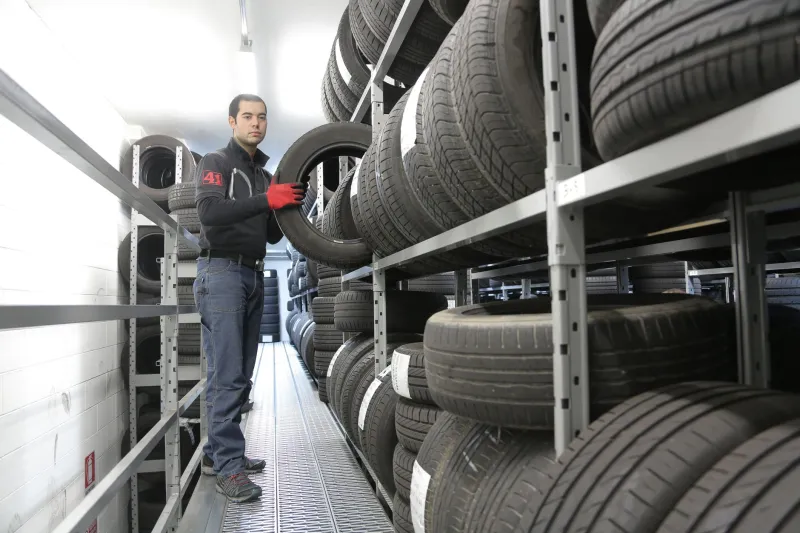
For tyres, horizontal stacking is usually the kinder option. Lay wheels flat, alloy face up or down with protection, and keep the stack modest. A piece of cardboard or foam between each wheel protects the lacquer and stops faces from rubbing. Do not stack them directly on bare concrete; use a pallet, a rubber mat or a couple of offcuts of timber to keep the cold and damp from wicking upwards.
Hanging looks tidy and saves floor space, but it is easy to do badly. A dedicated wheel rack with proper rim hooks is fine. Hanging a wheel by its tread or by a single bolt hole for months is not. If you must stand wheels upright, rotate them occasionally so the same part of the tyre is not carrying the load all winter. And please, do not lean them against a wall and hope for the best; that is how you get a flat spot and a scuff in one go.
Damp is the real enemy
Cornish garages often breathe moisture. Condensation forms on cold metal, and the cycle repeats every time the temperature drops. Keep wheels off the floor, away from leaking gutters and out of the dampest corner. If your garage has ventilation, use it. A small dehumidifier can help in a sealed space, but do not bother trying to seal a garage that is already letting the weather in.
Avoid wrapping wheels in plastic sheeting or bin bags. That traps moisture against the alloy and gives corrosion a private sauna. Breathable wheel covers are a better bet: they keep dust and sunlight off while letting moisture escape. If you are storing tyres without rims, keep them clean, dry and out of direct sunlight, and avoid stacking them too high.
Keep the sun off the rubber
UV light degrades tyre rubber and wheel lacquer over time. A garage window or a translucent door can let in enough sunlight to fade a set of tyres over a few months. Opaque, breathable covers are ideal. If you are using old bedsheets, make sure they are dry and clean. A dusty cover is just a grit delivery system for your alloy faces.
The pre-refit check
Before the wheels go back on the car, give them a proper once-over. Look for cracks, bulges, embedded screws and perished valve stems. Check the centre bore and mating faces for corrosion, and make sure any spigot rings are still seated properly. Clean the hub face on the car as well; a bit of corrosion there can cause vibration that feels like a wheel balance problem.
Set the pressures back to the car's recommended figures, not the storage pressures. Re-torque the wheel nuts to the correct setting, then check them again after about 30 miles. If you have had the wheels off for months, it is also worth checking the tyre dates and giving the tread a quick measure. Rubber ages even when it is not being used.
Storing a second set of wheels is not glamorous work. But twenty minutes of cleaning, drying and sensible stacking can save you a corroded alloy face or a set of flat-spotted tyres next spring. In a county where the air is salty and the garage floor is never quite dry, that is time well spent.