The Quiet Weight Problem: Tyre Specs That Actually Matter on an EV
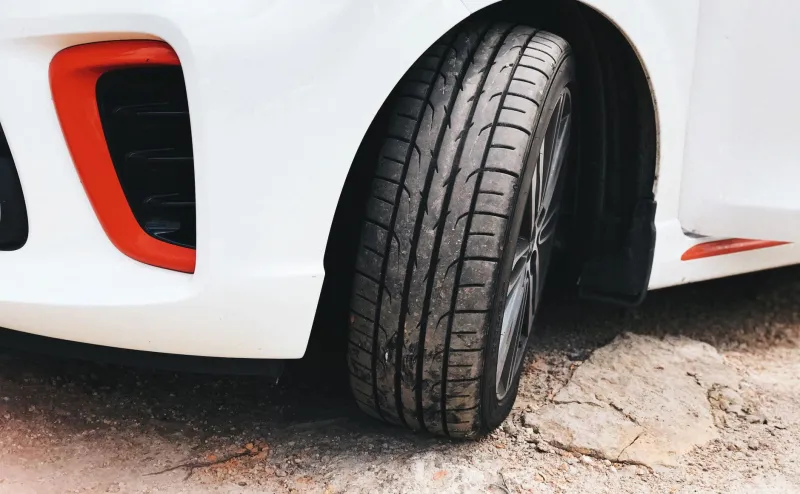
Electric cars have a habit of making everything feel effortless. You press the pedal, the car pulls cleanly, and the cabin stays quiet enough to hear the rain on the roof. What you do not hear is the extra mass sitting low in the floor, or the way instant torque is working the front tyres every time you leave a junction. That is why EV tyres are not simply ordinary car tyres with a different label on the sidewall.
Here at Tamar Wheels, we spend a lot of time talking about fitment, alloys and the state of Devon and Cornwall's roads. The EV question keeps coming up, usually after someone has bought a set of wheels online or found a bargain set of tyres that are the right size but not the right spec. So let us walk through what actually matters.
The kerb weight is not a footnote
A petrol hatchback might weigh 1,250kg. A comparable electric model can easily add 300kg to 500kg, mostly in the battery pack. That weight is low down, which helps handling, but it still has to be carried by four relatively small contact patches. The tyre load index is the number that tells you how much weight each tyre can support at its maximum pressure.
A 94 load index is not the same as a 98. If your door pillar or handbook says 98 XL, fitting a 94 because it was cheaper is not a harmless swap. It reduces the tyre's load margin, and on a fully loaded car with passengers and luggage, that margin matters. Check the vehicle placard first, not the tyre you happen to have in the garage.
XL does not automatically mean EV-ready
Extra Load, or XL, tyres have a reinforced sidewall and a higher load capacity for the same size. Many EVs need XL tyres, but not every XL tyre is designed for electric-car duty. Some EV-specific tyres also use acoustic foam to quieten road noise, a compound tuned for lower rolling resistance, or a construction that copes with the extra weight without turning the sidewall into a trampoline.
That does not mean you must buy the exact original tyre. It does mean you should match the load index and speed rating, and think about what you are asking the tyre to do. A quiet cabin makes tyre noise more obvious, so a coarse, cheap tyre can make an EV feel much less pleasant than it did on the original set.
Pressures need checking like a habit
EVs often run higher pressures than a petrol car of the same size, because there is more weight to support and because lower rolling resistance helps range. The placard on the door pillar is the starting point, and it usually gives pressures for normal and fully loaded conditions. Do not use the maximum pressure on the sidewall as your everyday figure.
Check pressures cold, at least monthly, and before a long trip. Underinflation is expensive on an EV: it blunts range, overheats the sidewall and wears the shoulders. Cold November mornings can trigger a pressure warning even when there is no puncture, so a quick check beats guessing. If your car has a direct TPMS display, use it as a prompt, not a substitute for a gauge.
Torque and weight eat tyres in different ways
Instant torque is great fun, but it is hard on the driven tyres. Add the extra mass and you get a car that can wear its front rubber noticeably faster than a petrol equivalent, especially if you enjoy the odd brisk exit from a roundabout. Regenerative braking helps preserve the friction brakes, but it does not stop the tyres from wearing.
Check tread depth more often than you did on your last car. The legal minimum in the UK is 1.6mm, but for wet Devon lanes and standing water, most of us should be thinking about replacement nearer 3mm. Look for uneven wear across the tread too. A heavy car with tired alignment can scrub a shoulder quickly, and a pothole strike can knock things out of tolerance without any obvious vibration.
The alloy swap checklist
Aftermarket alloys can look brilliant on an EV, but the wheel has to be rated for the load. A light, cheap alloy designed for a small petrol car may not have the load rating for a battery-heavy estate. Check the wheel's load rating, not just the PCD and offset. Make sure the centre bore is correct or that you are using proper spigot rings, and confirm brake clearance before the tyres go on.
Then there is insurance. Non-standard wheels are a modification, and most UK insurers want to know about them. Tell your insurer before you fit them, and keep the paperwork. The same applies if you change tyre size or fit a specification that differs from the manufacturer's original. An undeclared modification can complicate a claim, even if the car looks sensible.
Do not fit petrol-car rubber because it fits
This is the big temptation. The size is right, the price is lower, and the tyre looks perfectly respectable. But if the load index is too low, or the tyre is not suited to the weight and torque of an EV, you are trading safety margin for a saving. That is especially true on a car that is often fully loaded with family, dog and holiday kit.
Stick to the placard's load index and speed rating as a minimum. If you want to improve wet grip, look at credible tyre reviews and the wet braking performance rather than chasing the lowest rolling resistance figure. Range is important, but stopping distance on a greasy Cornish B-road is more important.
A simple EV tyre check for November 2026
Photograph the door pillar placard so you have the correct pressures and load index on your phone. Check tread depth and pressures monthly, and look for shoulder wear after long trips. If you fit new alloys, confirm the wheel load rating and tell your insurer. After any wheel change, recheck wheel-nut torque after about 30 miles, and get the alignment checked if you have clouted a pothole.
EV tyres are not mysterious. They are just asked to carry more weight, handle instant torque and stay quiet while doing it. Get the spec right, keep the pressures honest and treat wear as a maintenance item rather than a surprise. Your range, your wallet and your wet-weather stopping distance will all thank you.