Tread Tells Tales: How Uneven Tyre Wear Exposes Alignment, Bush and Pressure Problems
Photo: dave souza, CC BY-SA 4.0, via Wikimedia Commons
Tyres are the only part of your car that actually touches the road, which makes them a surprisingly honest witness. A pull to the left, a scuffed inner shoulder or a row of scalloped tread blocks is not just cosmetic. It is evidence. Before you book a four-wheel alignment or replace a pair of tyres, spend twenty minutes reading the tread like a crash report. You might save yourself a second set of rubber and a lot of guesswork.
Start with a clean sheet, a torch and your phone
Park on level ground with the wheels straight. Check pressures cold, then photograph each tyre in four zones: outer shoulder, outer tread, inner tread and inner shoulder. Use a tread depth gauge if you have one, or the old 20p test for a rough UK check. Run your hand gently around the tread in both directions. A sawtooth feel across the blocks is feathering, and it often points to toe. Note the mileage and any recent kerb strikes, suspension work or MOT advisories.
Compare left to right, front to rear. A pattern on one corner is usually a local fault: a bent component, a worn bush or a heavy kerb hit. The same pattern on both sides often points to geometry, pressures or the way the car is driven.
Inner-edge scrubbing: camber, toe or a bent bit
If both front tyres are scrubbing on the inside edge, the car may be running too much negative camber or too much toe-out. On a modified or lowered car, that is almost expected until someone sets it up properly. If only one front inner edge is worn, think impact damage: a bent strut, a distorted control arm or a worn top mount after a Cornish pothole.
Rear inner-edge wear is a common headache on lowered cars. The camber may look fine on paper, but toe can be out enough to drag the inner shoulder down the road. A proper four-wheel alignment usually costs around £50 to £90 at an independent garage, with laser or Hunter setups at the upper end. A worn bush might add £80 to £200 per corner plus labour, while a bent arm can be £100 to £250 before fitting. Fix the cause first, then align.
Outer-edge wear: roundabouts, toe-in and underinflation
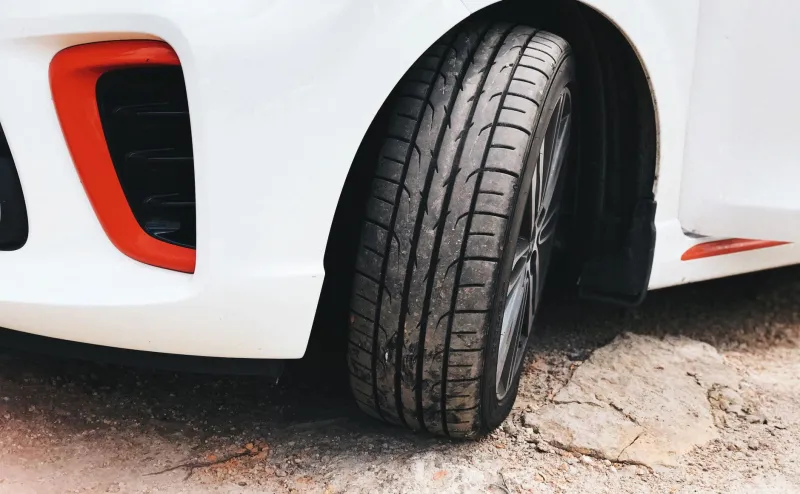
Both front outer shoulders wearing faster than the rest is not always a fault. Lots of roundabout work and enthusiastic cornering will do it, especially if pressures are a little low. One outer edge, however, deserves a closer look. Toe-in can scrub the outer shoulder, and a kerb strike can knock the geometry out on one side.
Check the door-pillar placard rather than the maximum pressure on the sidewall. Underinflation lets the shoulder flex and wear, and it also builds heat. On a loaded estate or a car that regularly carries bikes and camping kit, rear pressures matter more than most drivers think.
Centre-bulge wear: pressure and load
A bald strip down the middle usually means overinflation, though modern radial tyres are less dramatic about it than old crossplies. It can also show up when a car is regularly loaded heavily and run at solo-driver pressures. The fix is free: set pressures to the manufacturer's figures for the load you actually carry, and check them monthly.
Do not ignore a slow leak just because the tyre looks fine. A TPMS light that comes and goes is a hint, not a nuisance. A puncture repair is typically £25 to £45; a new tyre is rather more.
Cupping and scalloping: dampers, balance and bushes
Cupping looks like scooped depressions around the tread, and scalloping is a wavy pattern across the blocks. On UK B-roads, worn dampers are a prime suspect. If the tyre is skipping instead of staying planted, it will wear in patches. An unbalanced wheel, a buckled rim or a worn bush can produce a similar signature.
A wheel balance is usually £10 to £20 per wheel. A replacement damper might be £80 to £200 per corner plus fitting, depending on the car. If you see cupping plus a bouncy ride or uneven tyre contact, get the suspension checked before you fit fresh rubber. New tyres on tired dampers will simply wear out in the same pattern.
Flat spots: braking, storage and seized calipers
A single bald patch is often a flat spot from hard braking or a car that has sat for months. But if one wheel is much hotter than the others after a drive, suspect a sticking brake caliper. A dragging brake will scrub that tyre and waste fuel. A remanufactured caliper is often £100 to £250 plus labour.
Feathering and diagonal wear: toe and moving parts
Feathering feels like a gentle sawtooth when you run your hand across the tread. It usually means toe is out, and it can appear diagonally across the tyre. Worn bushes make it worse because the geometry changes under load. That is why an alignment done on knackered bushes is a waste of money: the readings will move as soon as you drive away.
Ask for a before-and-after printout when you have alignment done. A good garage will happily provide one. If they cannot, find another garage.
What matters for MOT and insurance
Uneven wear is not automatically an MOT failure. The legal tread limit is 1.6mm across the central three-quarters of the tyre, and cuts, bulges or exposed cords are failures. Worn suspension bushes may be an advisory or a failure if they are excessively worn or insecure. The real risk is leaving a handling fault to become a tyre failure.
For insurance, routine alignment and standard replacement suspension parts are not usually modifications you need to declare. But if you have changed ride height, fitted adjustable arms or altered the suspension geometry beyond standard, tell your insurer. It is better to have that conversation before a claim than after.
The verdict
Your tyres are not just consumables; they are the paper trail. Photograph the wear, note the pressures and get the cause diagnosed before you buy new rubber. Fix the alignment, bush or damper that caused the pattern, and the next set will last far longer. In Cornwall, where the lanes are tight and the potholes are ambitious, that is money well spent.