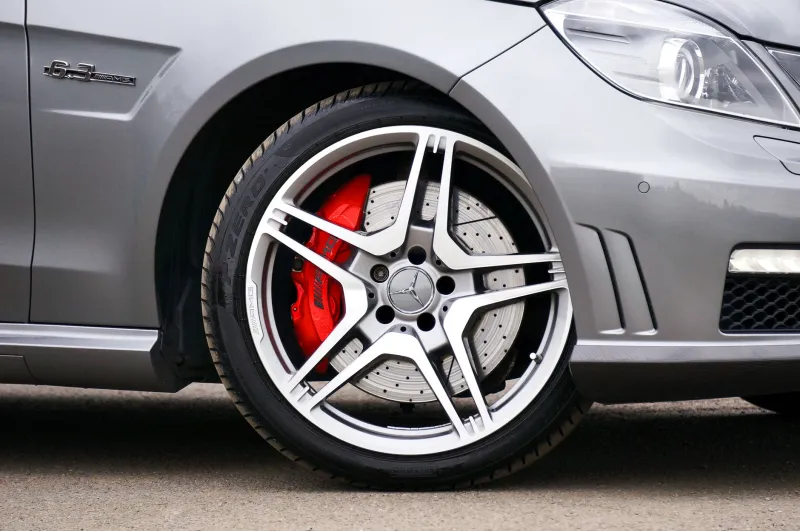
Kerb Rash Isn't a Death Sentence: Judging Alloy Wheel Damage Before You Spend

Photo by Photo by Swansway Motor Group on Unsplash on Unsplash
Cornwall is brilliant at finding new ways to test a wheel. Narrow lanes, granite kerbs, farm gates that appear without warning, and potholes deep enough to hide a pasty. So when you hear that horrible crunch, the first question is usually whether you have ruined a wheel or merely added some character.
The honest answer is that alloy damage sits on a spectrum. At one end is kerb rash you can live with until the weather improves. At the other is a crack or a bend that makes the wheel unsafe, no matter how good it looks after a refurb. This is a safety-first, money-aware way to sort one from the other before you spend a penny.
Start With Soap, Not a Quote
Give the wheel a proper clean first. Brake dust and road filth hide cracks surprisingly well. Once it is dry, look at the whole wheel in good light, not just the bit that hit the kerb. Check the outer lip, the inner barrel, the spokes, the mounting face, and the area around the valve.
Cosmetic kerb rash usually means paint has been scraped off and a little aluminium has been grazed. If the lip is still round, the spokes are straight, and the tyre is holding pressure, you are probably in refurbishment territory rather than replacement territory.
Structural damage looks different. A flat spot on the lip, a bend you can see when you spin the wheel, a crack running from the bead seat, a dent in the inner barrel, or a wheel that will not hold air are all warning signs. So is a vibration through the steering wheel that arrived after the impact. If the tyre has a bulge or exposed cords, stop worrying about the alloy and replace the tyre before driving anywhere.
What a Refurbisher Can Honestly Fix
A good wheel refurbisher can work wonders with cosmetics. Stripping, filling, repainting, powder coating and diamond-cut finishing can make a scuffed wheel look factory-fresh. That is fine when the damage is skin-deep. It is not a substitute for structural repair.
Minor bends are more nuanced. Some alloys can be straightened within the manufacturer's tolerance using controlled pressure and, in some cases, heat. A reputable specialist will identify the wheel material and the location of the bend rather than simply dragging it onto a press. A forged wheel and a cheap cast wheel do not respond the same way, and a bend near a spoke root is not the same as a gentle lip deformation.
Cracks are where you need to be blunt with yourself. Many alloy wheel cracks are not suitable for road use once welded, especially if they sit in a high-stress area. Welding can be done, but repairing a cracked wheel for normal road use is a specialist judgement, not a DIY favour. If someone offers to weld a cracked alloy without crack testing, pressure testing and a clear explanation of what they are doing, walk away. A wheel is a structural part, not a bit of trim.
The Checks That Separate a Scuff From a Scrap
When you take the wheel to a specialist, ask what they are actually measuring. A runout check with a dial gauge looks at both lateral and radial movement as the wheel spins. That tells you whether the wheel is bent or out of round beyond a safe limit. A wheel can look fine on the car and still fail a runout check.
Crack testing matters too. Dye penetrant inspection can reveal fine cracks that are invisible to the eye. A pressure test can show whether a wheel is leaking at the bead seat or through a repair. Road-force balancing is useful because it highlights stiff spots and runout that a standard balance might miss.
Also ask about the mounting face and bolt holes. Elongated bolt holes, a gouged mounting face or a chewed centre bore can mean the wheel is not seating properly. That is not something a coat of paint will fix. If the wheel has no clear part number, no load rating and no known history, be cautious. Cheap unknown alloys are not worth expensive repair work.
When Replacement Is the Cheaper Option
It feels wasteful to bin a wheel over one crack, but the maths often flips once you add up refurbishment, tyres, balancing and the risk of a repeat failure. A cracked spoke, a crack near the hub, a badly bent lip that has already been straightened once, or a wheel that will not balance cleanly are all good reasons to retire it.
Replacement does not always mean a main-dealer price. A good used wheel with the same part number, size, offset and load rating can be sensible, provided you check it properly. Do not buy a second-hand alloy that has been freshly painted to hide kerb damage. Look at the inside barrel, check for cracks and ask for the part number. If you are replacing one wheel on a car with sensitive electronics or a four-wheel-drive system, keep the tyre circumference and specification sensible.
And if you are using the excuse to upgrade, remember the insurance angle. A like-for-like replacement usually raises fewer questions than a change in size, offset or colour. Declare modifications if the specification changes. Keep receipts and photographs, especially if a pothole claim might follow.
The Insurer and the Evidence Trail
If the damage happened on a named road or in a car park, photograph the wheel, the tyre, the location and the date. If you are claiming, do not bin the damaged wheel until the insurer has had a chance to assess it. A refurbishment invoice is useful proof of maintenance; a receipt for a replacement wheel is useful proof of specification.
Most cosmetic refurbs are not modifications in the insurance sense, but a change of wheel size or style can be. If in doubt, ring your insurer before you fit rather than after. It is a dull five-minute call that can save a very dull argument later.
A Saturday Morning Triage
Clean the wheel. Check the tyre for bulges, cuts and pressure loss. Spin the wheel and look for obvious bends. Look for cracks around the spokes, hub and bead seat. If you see a crack, a significant bend or a leak, get it assessed by a proper wheel specialist. Get a written quote for repair and compare it with the cost of a known-good replacement.
Then make the call. Kerb rash can wait. A cracked or badly bent wheel should not. At Tamar Wheels, the rule is simple: if you would not trust it at 70mph on the A30, it is not a refurbishment job. It is a replacement.