Cold Snap, Warm Tyres, Red Light: Decoding TPMS Alerts This November
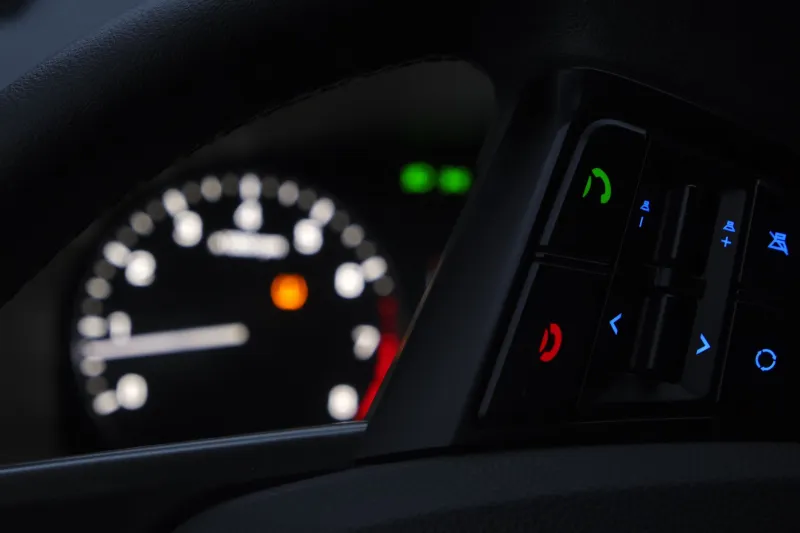
There is a particular kind of November morning in Devon and Cornwall where the car is frosted, the lanes are slick, and the dashboard decides to greet you with a yellow tyre-shaped light. It feels dramatic. It usually is not. Cold weather is one of the most common reasons a tyre-pressure monitoring system, or TPMS, throws a wobbly at this time of year — and understanding why takes most of the panic out of it.
Why cold mornings upset your TPMS
Tyres are not sealed balloons of fixed pressure. The air inside them responds to temperature. As the mercury drops overnight, the air contracts, pressure falls, and your TPMS sensors report what they find. A rough rule of thumb is that pressure changes by about 0.1 bar — around 1.5 psi — for every 10°C shift. So a car that was sitting at 32 psi on a mild afternoon can be closer to 29 or 30 psi on a frosty morning without anything being wrong.
That matters because most systems are calibrated to warn when pressure falls a set amount below the manufacturer's recommended figure. If your tyres were already a little soft, a cold snap can be the nudge that pushes them over the threshold. The light comes on, the driver assumes a puncture, and the tyre is often perfectly sound — just colder and slightly under-inflated.
This is why TPMS alerts cluster in late autumn. It is not that Cornish roads suddenly become puncture magnets in November, although the potholes do their best. It is that the baseline pressure has moved while the car has been parked.
Check cold, inflate cold, then reset
The first rule of TPMS is simple: do not reset anything until you have checked the pressures properly. A reset tells the system that the current pressures are the new normal. If you reset while a tyre is genuinely low, you have not fixed the problem — you have just told the car to stop mentioning it.
Use the placard figures, usually inside the driver's door shut, fuel flap or handbook. Check all four tyres, plus the spare if your car monitors it. Use a decent gauge rather than the one on a tired forecourt airline, and check when the tyres are cold — meaning before you have driven more than a mile or so. If you have just come off the A38, wait or accept that the readings will be slightly higher.
Inflate to the recommended pressures, refit the valve caps, and then follow the reset procedure for your car. That might be a dashboard menu, a button under the glovebox, a sequence involving the ignition, or a drive above a certain speed. Some systems need an OBD tool or a specialist. If you are unsure, the handbook is the place to look — not a random internet forum from a decade ago.
After resetting, give it a proper drive. Many systems need 10 to 20 minutes of mixed driving before they settle. If the light returns within a few miles, stop treating it as a cold-weather sulk and start treating it as information.
When it is not just the cold
A warning that appears once on a frosty morning, disappears after a check and inflation, and stays away is usually a temperature story. A warning that comes back repeatedly, flashes, or is paired with a visibly soft tyre is not.
Look for a puncture, a leaking valve, a damaged sidewall, or a wheel that has taken a knock. Cornish B-roads are good at hiding sharp stones and bad at forgiving low-profile alloys. If one tyre is losing pressure faster than the others, get it looked at properly. A slow puncture can be a nail, a corroded valve, or a bead seal that is giving up — none of which will be solved by a reset.
Direct TPMS sensors can also fail. These are battery-powered units inside the wheel, and they do not last forever. Seven to ten years is a common lifespan, though heat, vibration and luck all play a part. When a sensor battery dies, you may get a warning that will not clear, a blank reading on one corner, or a message saying the system is unavailable. That is a sensor issue, not a tyre issue, and it needs a garage with the right kit to diagnose and replace.
TPMS, MOTs and the 2026 winter check
For UK drivers, TPMS is not just a friendly suggestion. On cars first used from 1 January 2012, an illuminated TPMS warning lamp is an MOT inspection point. If the system is fitted and the lamp stays on, that can count against the car. So a warning light that you have ignored since the first cold morning in November 2026 is not something to carry into a test in the new year.
It is also worth knowing that TPMS is a backup, not a replacement for a manual check. It will not always catch a slow leak before it becomes a problem, and it cannot tell you that a tyre is worn, cracked or damaged. With winter weather arriving, spend five minutes checking tread depth, sidewalls and pressures before the next long drive. If you run winter or all-season tyres, check those too — they are not immune to cold-pressure drops just because they are designed for the season.
The sensible November habit
Treat the first cold snap as a prompt, not a crisis. Check the pressures, inflate to the placard figures, reset the system correctly, and note whether the warning returns. If it stays away, you have probably just met the normal physics of a chilly morning. If it comes back, or if one tyre keeps lagging behind the others, get it investigated before it turns into a damp, dark-wheel-change job on a Cornish verge.
At Tamar Wheels, we would rather you ignored a false alarm than ignored a real one. The trick is knowing the difference — and in November, that usually starts with a pressure gauge and a little patience.