Grip Through the Green Tunnel: Tyre Choices for Wet Devon and Cornwall Lanes

Photo: Trevor Rickard, CC BY-SA 2.0, via Wikimedia Commons
There are roads in Devon and Cornwall that feel less like tarmac and more like a green tunnel. The hedges close in, the surface cambers away towards a ditch, and by November 2026 the verges have started to shed a fresh layer of leaves onto every bend. It is beautiful. It is also a proper test of a tyre.
At Tamar Wheels, we spend a lot of time talking about fitment, offsets and upgrade paths, but the humble tyre is still the only part of the car actually touching the road. On a Cornish lane, that contact patch has a harder job than many drivers realise.
The Tamar Test, in plain English
A motorway tyre needs to be stable, quiet and efficient at a steady speed. A tyre for a wet, leafy B-road needs to clear water, cope with polished tarmac, shrug off the occasional stone wall and stay predictable when the surface changes mid-corner. Those are not the same brief.
On many West Country lanes you get a mix of conditions in the space of half a mile: slick tarmac under trees, mud dragged out of a field gate, a patch of gravel, then a tight bend with no sight line because the hedge is eight feet high. You are often doing 30mph or less, but the car still has to stop in a hurry when a tractor appears around the next corner.
That is the Tamar Test: not lap times, not track-day bragging rights, just wet grip, a sturdy sidewall and a tyre that tells you what it is doing before it lets go.
Tread talk: open shoulders beat aggressive blocks
For lane work, water clearance matters more than a macho-looking tread pattern. Look for wide longitudinal grooves and open shoulder blocks that can push water away rather than trapping it. A directional or asymmetric pattern can both work well, provided the tyre has a decent wet rating and the tread depth is healthy.
Very aggressive, blocky mud-terrain patterns are not automatically better. On wet tarmac they can feel vague and noisy, and on leafy lanes you are more likely to need wet braking than serious off-road traction. A good all-season or a summer tyre with strong wet performance will usually make more sense for most drivers in Devon and Cornwall, especially if the car rarely sees snow.
Sipes, the little cuts in the tread blocks, are worth paying attention to. They help the rubber open up and bite on damp, greasy surfaces. On a cold, wet morning in the Tamar Valley, that matters more than a fancy sidewall graphic.
Sidewalls and rim protectors: hedge-bank insurance
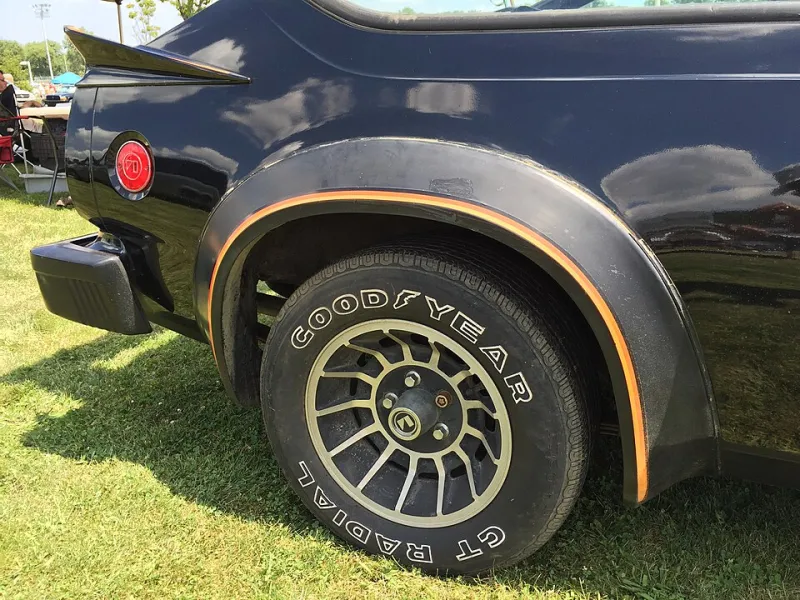
Narrow lanes are not kind to the outside of a wheel. Passing places, overgrown banks and stone walls hidden under vegetation all seem to reach out for the rim. A tyre with a decent rim protector, usually a raised rubber rib near the bead, can absorb a surprising amount of minor contact.
Sidewall strength is the other half of the story. A very low-profile tyre on a large alloy might look sharp on a driveway, but it gives you less rubber to soak up potholes, broken edges and the general roughness of rural roads. If you drive these lanes daily, a smaller wheel with a taller sidewall is often the smarter upgrade, not the other way around. It can improve comfort, reduce wheel damage and even give you a better choice of load ratings.
That does not mean everyone should ditch their 19s. It does mean you should think about what the wheel and tyre are being asked to survive. A rim-protection rib and a reinforced sidewall are not glamorous selling points, but they are the sort of details that save you a refurbishment bill.
Pressure advice for lanes, not just motorways
Tyre pressure is the free adjustment most drivers ignore. Check it cold, using the door pillar or handbook figures, and adjust for heavy loads if the manufacturer lists a separate figure. Do not overinflate to protect the rims; a hard tyre can skip over wet, broken surfaces and reduce the contact patch just when you need it.
On rural roads, a tyre that is a few psi down at the rear may feel soft and vague, while one that is too high can feel skittish. Check monthly, and before any long trip with a boot full of camping gear or a bike rack. If the car has TPMS, treat it as a warning system, not a substitute for a gauge.
Also check the spare or inflation kit. A puncture in a remote lane with no phone signal is not the moment to discover the sealant is out of date.
When your commute is the A38, not the B3266
If most of your driving is dual carriageway and motorway, a touring tyre with low noise and good rolling resistance may be the better buy. If you live down a single-track lane and only occasionally join the A38, wet grip and sidewall protection should move up the list.
For many drivers, a quality all-season tyre is the sensible compromise: enough cold-weather performance for a Devon frost, decent wet braking and less fuss than swapping tyres twice a year. The key word is quality. A cheap all-season can be the worst of both worlds, while a well-rated one can handle a British winter without drama.
Matching tyres across an axle is still important. Mixing a budget tyre with a premium one on the same axle can upset braking balance in the wet, and that is exactly the sort of thing you notice on a greasy lane.
What we would actually check before buying
Start with the size and load rating the car actually needs, then look at the wet grip rating and owner reviews from UK drivers. Check whether the tyre has rim protection if you are running larger alloys. Ask whether it is designed for the sort of loads your car carries, especially if it is an EV or a tow car.
Finally, get the basics right: correct pressures, decent tread depth and a proper alignment check if the car has been clouting kerbs. A premium tyre with poor geometry will still wear badly and feel wrong.
The best tyre for a Cornish lane is not necessarily the best tyre for a motorway commute. It is the one that keeps its shape, clears the water and gives you confidence when the road turns green.