Bolt-On Trouble: Five Wheel Mods That Scare Insurers, and Five That Usually Don't
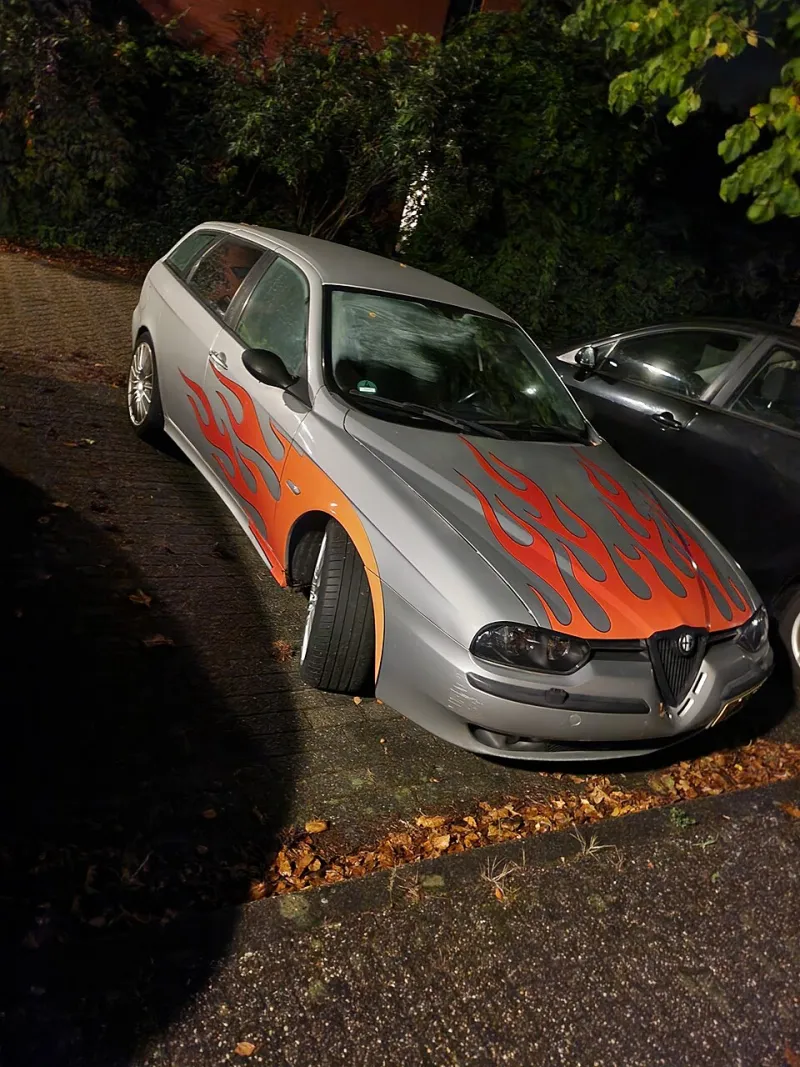
Photo: Sebastiaan Broekhoven, CC BY-SA 4.0, via Wikimedia Commons
Here's a sentence that has ruined more Sunday afternoons than any speed camera: "We're sorry, but we're unable to offer renewal on this vehicle as it has undeclared modifications."
Wheels are the gateway drug of car modification. They're the first thing anyone changes, they're the thing most likely to be left off the declaration form, and they're the thing insurers have quietly got quite good at spotting. So let's go through it properly — what actually causes trouble, what usually doesn't, and where the line sits.
Why insurers care about wheels in the first place
It isn't about looks. It's about three things: whether the car still behaves the way the manufacturer designed it to, whether the parts are fit for purpose, and whether the car has become more attractive to steal.
A set of £2,000 forged alloys on a Fiesta ST is a theft magnet. A stretched tyre on a nine-inch rim is a handling question mark. A wheel that changes the overall rolling radius messes with the speedometer, the gearing, and — depending on the car — the calibration of ABS and stability systems. Insurers price risk, and all of that is risk.
None of which means don't do it. It means declare it, and choose sensibly.
Five that tend to cause real trouble
1. Bigger wheels with a changed rolling radius. Going from 17s to 19s is fine if the overall diameter stays within a couple of percent. Go further — a taller sidewall plus a bigger rim, or a noticeably smaller diameter — and you've altered the speedo reading, the final drive and the way the car puts power down. Insurers view this as an engineering change, not a cosmetic one, and some will decline outright.
2. Spacers and wide-track setups. Push the wheels out and you've changed the scrub radius, loaded the bearings differently, and possibly pushed the tyre shoulder past the arch line. Anything protruding beyond the bodywork is a Construction and Use problem before it's ever an insurance one. Bolt-on hubcentric spacers with proper longer studs are far less objectionable than cheap universal shims, but both should be declared.
3. Stretched tyres. Fitting a 205 on an eight-and-a-half-inch rim because it looks great is a decision insurers and tyre manufacturers both frown at. The tyre is being run outside its specified rim width range, which affects sidewall support, load capacity and bead seating. Add a poke-and-stretch stance and you're in the highest-risk bracket there is.
4. Big brake kits and clearance adaptations. A proper BBK is a performance modification and should be insured as one. What catches people out is the halfway house: standard calipers spaced out to clear new wheels, or wheels chosen purely because they scrape past the calipers. If the braking system has been altered to fit a wheel, that's a modification to the brakes.
5. Cheap unbranded or replica alloys. No JWL or TÜV marking, no published load rating, and often a load index that isn't up to a heavy diesel estate or — worse — an EV. Modern electric cars are seriously heavy, and a wheel that's fine on a 1,100kg hatchback is not fine on a 2,200kg SUV. Insurers do ask, and increasingly they ask for the load rating.
Five that usually sail through — but declare them anyway
1. OEM-spec alloys in the same size. A different design in exactly the same diameter, width, offset, PCD and load rating as the factory fitment, ideally from a higher trim of the same model. This is the safest upgrade in the business.
2. Winter tyres on a second set of standard wheels. Well established as acceptable, and most insurers won't load the premium. Tell them anyway — the note on file is free.
3. Refurbishment and colour changes. A powder coat in a different shade, or a proper diamond-cut refurb. Cosmetic, cheap to declare, and essentially never a problem. Do mention a colour change from the factory finish, purely so the vehicle description matches.
4. Premium tyres in the correct size and rating. Swapping a mid-range tyre for a Michelin in the same size, speed and load index isn't a modification in any meaningful sense. Going to a different size, a lower speed rating or a lower load index is.
5. Cosmetic bits. Centre caps, locking wheel nuts, coloured valve caps, black wheel bolt covers. Nobody is loading your premium for these. Nobody is declining a claim for them either.
What actually happens if you don't declare
This is the bit people get wrong. The common belief is that the whole policy evaporates and you're left with nothing.
In reality it's messier and, in some ways, worse. Insurers can't generally refuse third-party claims — the law protects the innocent party. But they can, and do, seek to recover what they've paid from you, cancel the policy, refuse to pay for your own car, and record the cancellation. That last one follows you. Every future quote asks: "Have you ever had insurance cancelled or voided?" Answer yes and watch the prices climb.
A mid-term cancellation for non-disclosure can end up costing more than the wheels did.
How to plan an upgrade without the renewal shock
Do it in the right order. Ring your insurer before you buy, not after. Give them the exact specification — diameter, width, offset, tyre size, and whether the rolling radius changes.
If you're buying aftermarket, stick to a reputable brand with published load ratings and JWL or TÜV certification. If your car is heavy, an EV, or a van-based MPV, check the load index properly rather than eyeballing it.
Keep the standard wheels if you possibly can. Having a factory set to put back on is the single best insurance policy available, in both senses of the phrase.
And be honest about what the car is for. If it's a daily that does 12,000 miles a year on the A38, an OEM-plus wheel in a slightly nicer finish will do everything you want and cost you nothing at renewal. If it's a weekend toy with a roll cage, get a specialist policy and enjoy yourself.
The bottom line
Insurers aren't the enemy here, but they are a business, and businesses price risk. The upgrades that get you in trouble are the ones that change how the car behaves or introduce parts of unknown quality — altered geometry, out-of-spec tyres, unbranded alloys. The ones that don't are the ones that respect the original engineering.
Declare everything, even the boring stuff. It takes ten minutes and it's the cheapest modification you'll ever make.