Bolted On, Not Built For It: The Hidden Load Rating Problem With Cheap Alloys
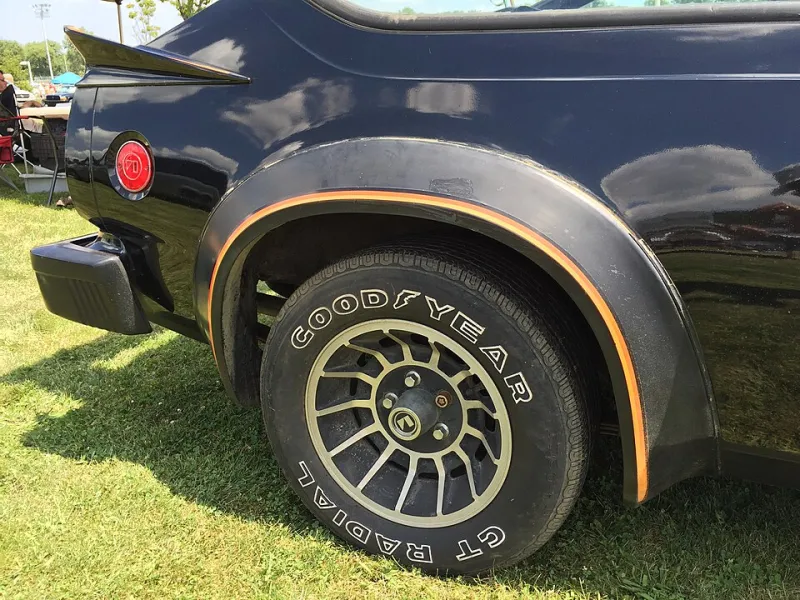
Photo: CZmarlin — Christopher Ziemnowicz — a photo credit is required if this image is used anywhere other than Wikipedia., CC BY-SA 4.0, via Wikimedia Commons
Alloy wheel shopping usually starts with the visible stuff. Will they fit? What offset do I need? Will they clear the brakes? Does the centre bore match? Those questions matter, but there is another number that often goes unchecked until something goes wrong: the wheel's load rating.
In simple terms, a wheel has to carry its share of the car, the passengers, the luggage and whatever else you throw at it. A cheap alloy that looks the part but is not rated for the job can be a false economy. In 2026, with more heavy EVs and loaded tow cars on UK roads, that is worth taking seriously.
Myth one: if it bolts on, it fits
A wheel can have the right bolt pattern, the right centre bore and an offset that seems close enough, and still be unsuitable. Fitment is only the mechanical starting point. The wheel also needs to clear the brakes, sit correctly in the arch and, crucially, be strong enough for the vehicle's weight.
Load rating is the maximum vertical load a wheel is designed to support. It is not the same as the tyre's load index, although the two work together. The tyre carries the car through its contact patch; the wheel has to hold that tyre in place and transmit the loads into the hub. If the wheel is the weak link, no amount of premium rubber will save it.
Load rating is not the same as tyre load index
Tyre load index is the number on the sidewall, such as 91 or 94, which tells you the maximum load that tyre can carry at a specified pressure. Wheel load rating is usually quoted in kilograms per wheel by the wheel manufacturer, and it may be stamped on the wheel, listed in the specification sheet or printed on the box.
A common mistake is to assume that because the tyres are rated highly enough, the wheels must be fine. They are separate components. A budget alloy might have a quoted load rating that is lower than the car's requirements, or no clear rating at all. That is the red flag.
Doing the maths without guessing
You need the car's gross vehicle weight and, ideally, the gross axle weights from the handbook or chassis plate. The gross vehicle weight is the maximum the whole car is allowed to weigh when loaded. The axle weights tell you how that total is split between the front and rear.
As a rough check, divide the heavier axle's maximum load by two to get the minimum load each wheel on that axle should support. Then add a sensible margin for dynamic loads, potholes and the fact that real-world driving is not a laboratory test.
| Check | What it means in practice |
|---|---|
| Gross vehicle weight | The maximum total weight of the loaded car |
| Gross axle weight | The maximum load carried by each axle |
| Wheel load rating | The maximum load the wheel is designed to carry |
| Tyre load index | The maximum load the tyre can carry |
If a car has a rear axle limit of 1,200kg, each rear wheel needs to cope with at least 600kg in a simple static split. A wheel rated at 650kg might look fine on paper, but a loaded estate, a tow bar and a boot full of tools can eat into that margin quickly. A reputable wheel with a higher rating is the safer choice.
EVs and tow cars: the extra load nobody sees
Electric cars are often heavier than their petrol equivalents because of the battery pack. That extra mass is there all the time, not just when the car is full. EVs also deliver torque instantly and use regenerative braking, which puts different stresses through the wheels and tyres. A wheel that was fine on a lightweight hatchback may not be happy under a heavier EV.
Tow cars have a similar issue. The rear axle carries passengers, luggage, the tow bar's nose weight and the forces from a trailer or caravan. If you are regularly towing, the rear wheels are doing a lot of work. A cheap alloy with a vague load rating is not the place to save money.
Even without towing, a car full of people and holiday gear on a hot motorway run is heavier than many drivers imagine. Add a pothole at speed and the dynamic load can spike well above the static figure.
MOT, insurance and the paper trail
An MOT does not usually involve a tester looking up the load rating of your aftermarket alloys. But that does not mean load rating is irrelevant. The MOT checks wheel condition and security, and a cracked, buckled or badly damaged wheel can fail. If a wheel has been overloaded over time, damage may show up as cracks or distortion.
Insurance is the bigger practical concern. Modified wheels are a modification, and insurers generally want to know about them. If you fit aftermarket alloys and do not declare them, you may find your cover affected in the event of a claim. If the wheels are unsuitable for the vehicle, that could complicate matters further.
This is not about scaremongering. It is about disclosure. Tell your insurer what you have fitted, keep the receipt and keep the specification sheet showing the wheel's load rating. If you are buying second-hand, ask for that information before handing over cash.
How to spot a wheel that can take the weight
Start with a reputable brand or a seller who can provide a clear per-wheel load rating in kilograms. Look for a stamping on the wheel itself, often on the inner face or behind the spokes. Check that the rating is appropriate for your car's axle loads, not just its kerb weight.
Be wary of unbranded alloys sold mainly on looks with no technical data. A cheap wheel is not automatically unsafe, but a cheap wheel with no load rating is a gamble. If the seller cannot tell you what it is rated to carry, that tells you something.
Also consider the wheel's construction and weight. A heavy, poorly made alloy can affect steering feel, fuel economy and wear on suspension components. A lighter, well-engineered wheel may cost more upfront but be the better long-term buy.
The false economy, summed up
A set of budget alloys can save you a few hundred pounds at the till. A cracked wheel, a damaged tyre, a disputed insurance claim or a repair bill after a pothole can wipe that out in one go. The load rating is not a glamorous specification, but it is one of the most important numbers in the wheel buying process.
Before you bolt on a new set, check the axle loads, check the wheel rating and check with your insurer. A wheel that is built for the weight is not an upgrade; it is the baseline.