Flat Tyre, No Signal: Picking a Puncture Kit That Survives a Cornish B-Road
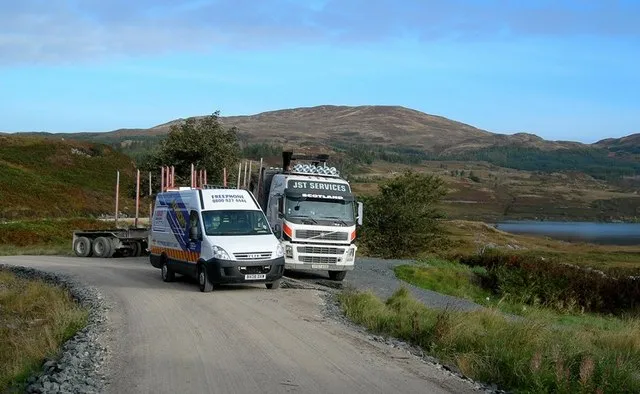
Photo: Mary and Angus Hogg, CC BY-SA 2.0, via Wikimedia Commons
There's a particular kind of quiet on a Cornish B-road when a tyre lets go. No hard shoulder to roll onto. A hedge on one side, a dry stone wall on the other, and a phone signal that gave up somewhere around the last village. Whatever you've got in the boot is now the whole recovery plan.
So it's worth knowing what each option can genuinely do, and where it stops being a solution and quietly becomes a bigger problem.
What's Actually in Your Boot Right Now
Most cars registered in the last decade leave the factory with one of four things: a temporary space saver, a can of sealant with a compressor, a set of run-flats and no spare at all, or, increasingly rare, a proper full-size spare. Plenty of drivers couldn't tell you which they've got without going to look. Go and look. It takes ninety seconds and it saves you standing in the rain reading a handbook by torchlight.
Space Savers: The Fifty-Mile Handshake
A space saver is a get-you-to-a-garage device, not a wheel. The usual guidance is a maximum of 50mph (80km/h) and roughly 50 miles, and honestly that's optimistic on the A390 in February. They're narrow, they're often ancient, and the tread on a fifteen-year-old one is frequently marginal.
Two things catch people out. First, a space saver usually has no TPMS sensor, so the warning light will stay lit for the whole journey. That's fine while you're limping home, but on cars that were required to have tyre pressure monitoring, a malfunctioning system is an MOT failure point, so don't roll up to a test with it fitted and expect a pass. Second, if the space saver is on the car when it's presented for MOT, it gets tested like any other road wheel, tread and all.
Read your handbook about which axle to fit it to. It genuinely varies between manufacturers, and getting it wrong on a front-wheel-drive car in standing water is a bad way to learn.
Sealant Kits: Brilliant Until They're Not
Aerosol sealant earns its place for one specific failure: a clean puncture through the tread, the sort a screw or nail leaves behind. That's it. It will not seal a sidewall, it won't fix a tear, and it can't do anything if the tyre has come off the bead after a kerb strike.
On narrow lanes, sidewall damage is the common one. Hedge cuttings, flint, the edge of a granite wall that's been quietly eating at the verge for two centuries, a tractor rut hiding a stone. If the sidewall's cut, the can is dead weight.
Other things worth knowing. Sealant has a use-by date, usually three to five years, and an out-of-date can is a confidence trick. Cold thickens it, so a kit left in the boot all winter may not flow properly. Some formulations can contaminate the TPMS sensor, so check whether yours is listed as sensor-safe. And once you've used it, most fitters will refuse to repair the tyre, because they can't see the injury through the gunk or trust a plug under a layer of latex. You're buying a new tyre either way, and possibly a sensor.
Run-Flats: Great Idea, Awkward Reality
Run-flats have reinforced sidewalls that let you carry on at around 50mph for roughly 50 miles after a pressure loss. That's genuinely useful on the A30 at night. It's less useful when the sidewall itself has failed, because the whole trick depends on that sidewall being intact. A proper sidewall blowout leaves you exactly as stranded as anyone else, just with a stiffer ride up to that point.
Repair policy varies wildly by manufacturer, and a lot of them say no. Availability is the other issue: a 225/45 R18 run-flat isn't sitting on a shelf in Bodmin on a Sunday, and the premium over a conventional tyre is real. Also worth remembering that run-flat systems rely on tyre pressure monitoring to warn you at all, so a dead sensor means the first you know about a puncture is the handling going strange.
If you've swapped run-flats for conventional tyres on a car that came with them, that's a specification change. More on that below.
The Full-Size Spare Nobody Specs Anymore
It's the best answer and the least fashionable. A fifth matching wheel means you drive home at normal speed and sort it out on your own schedule. Caveats: check it clears bigger brakes if you've upgraded, check the wheel bolts match, and if it's a different size to the rest, remember your speedo and differentials are now dealing with a mismatch. On a long run, get it sorted quickly.
Sidewalls Are the Real Enemy Down Here
Low-profile tyres and Cornish lanes are an awkward marriage. The shorter the sidewall, the less material there is between the rim and whatever the road throws at it. A 40-profile tyre on a 19-inch wheel gives you very little cushion, and a pothole that a 65-profile tyre absorbs without comment can pinch a 40-profile and crack a rim.
On repairs, the accepted standard (BS AU 159) limits a proper repair to the tread area, and damage to the sidewall means a new tyre, full stop. A bulge is not a cosmetic issue; it's a structural failure waiting to happen. The legal minimum is 1.6mm across the central three-quarters of the tread, but a tyre at 1.6mm in November is a tyre that will aquaplane long before it wears out.
What the Law and Your Insurer Care About
Anything bolted to the car has to be roadworthy, and that includes a space saver in use. Emergency fitment won't invalidate a policy, but if you've made a permanent change to how the car is equipped, say so. Removing run-flats permanently, fitting a spare wheel carrier, or swapping to a repair kit setup are all worth a phone call, because insurers work on disclosure rather than sympathy.
The Kit That Costs Less Than a Recovery Truck
A decent torch, gloves, a hi-vis vest, a tyre pressure gauge, a 12V inflator and a reflective triangle live in the boot for years and cost less than one recovery callout from a remote lane. Add a folding shovel in winter if you're on the moor. Check the sealant date in October. Check the space saver's pressure, because nobody ever does and they lose air like anything else.
And if you're on a B-road with no signal and a shredded sidewall, remember the AA and RAC both let you report a breakdown by app, which will queue the request over whatever signal you find next. Before that, get the car as far off the carriageway as the verge allows, get everyone behind the wall, and put the hazards on. No wheel or tyre is worth standing in a blind bend for.